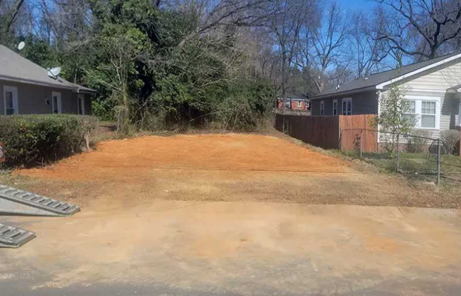
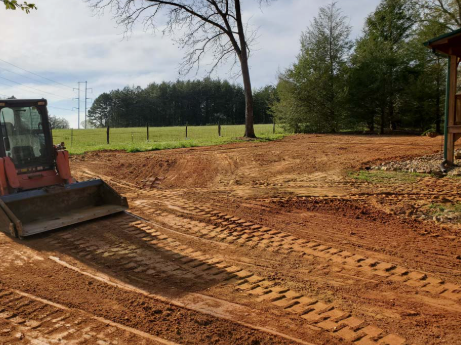
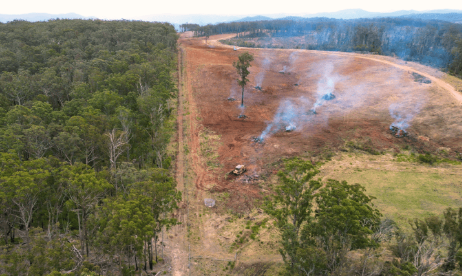
Terrain affects both the difficulty and the pace of the work. Flat, easily accessible land is more straightforward to clear than sloped, uneven, or rocky terrain, which can slow equipment operation and require more careful work to avoid erosion or drainage issues once clearing is complete.
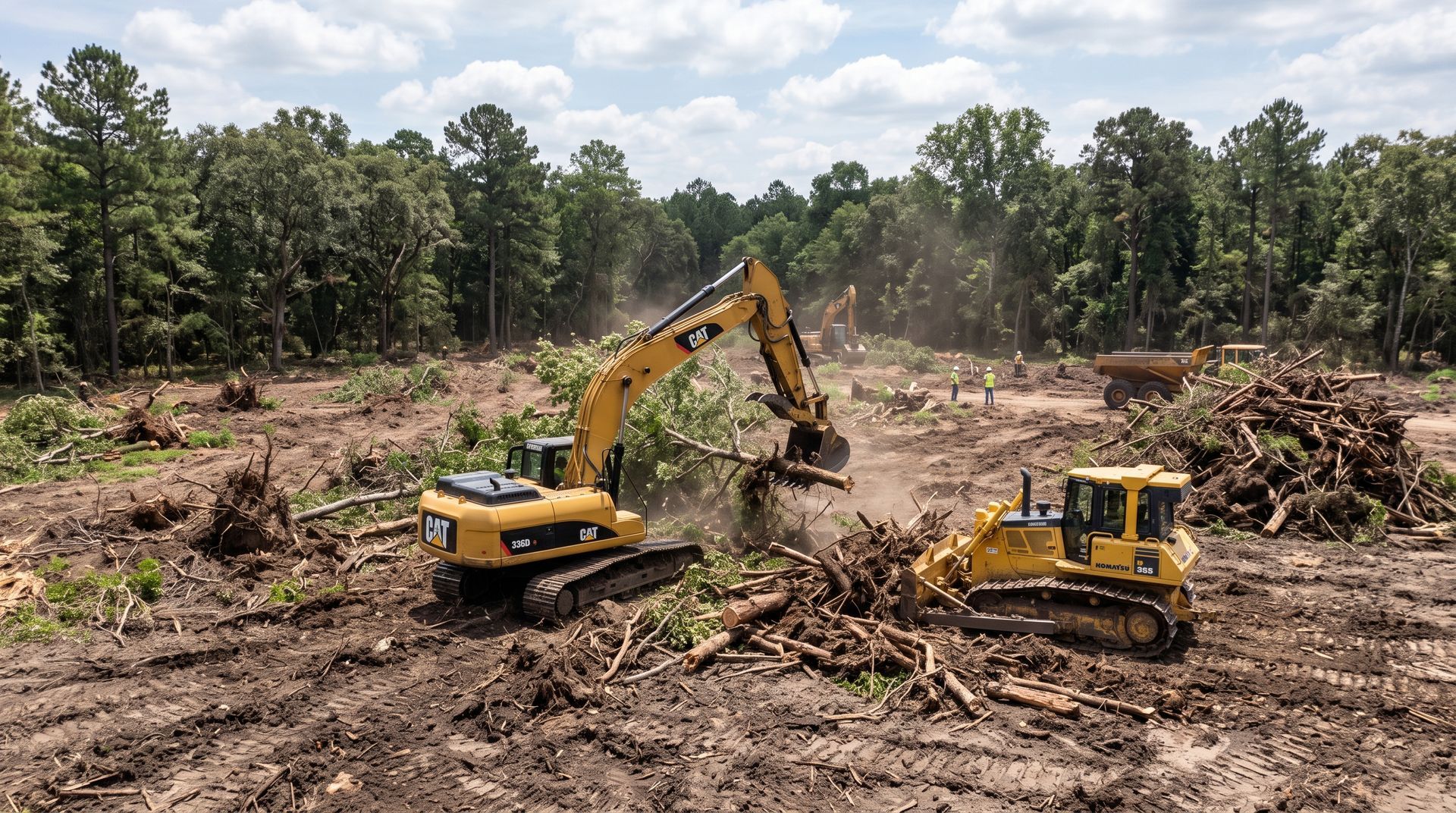
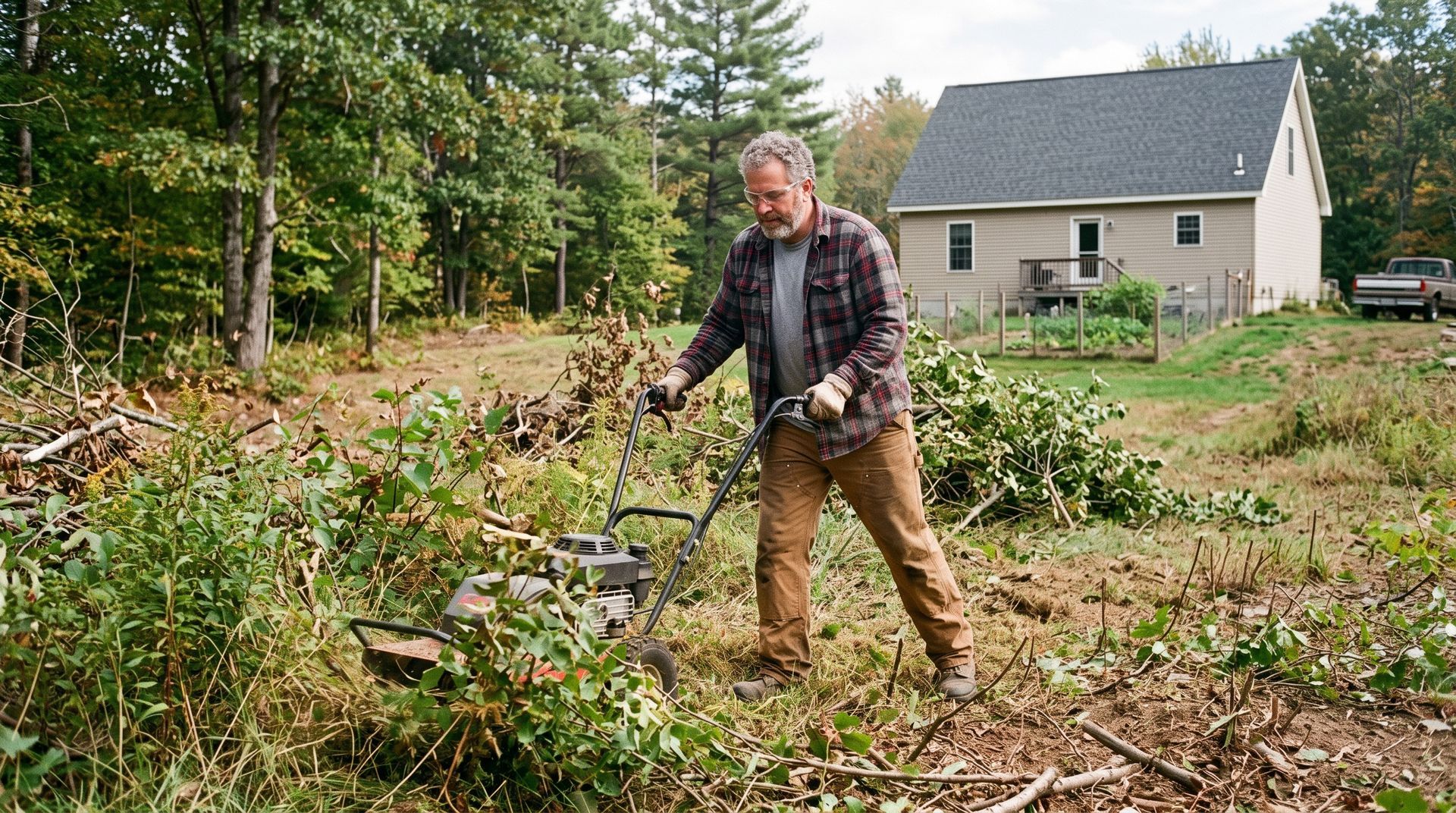
Vegetation density is one of the biggest factors in actual cost. A property with scattered brush and a handful of trees clears much faster than a densely overgrown lot with heavy underbrush and closely spaced trees. We assess vegetation density during our site walk, since this affects both the equipment needed and the time the job will take more than almost any other factor.
Access to the property matters for cost as well. A site with a clear path for equipment to enter and operate costs less to clear than a property with limited access, requiring more time and effort just to get equipment where it needs to be.
Disposal method affects pricing too. Forestry mulching, where vegetation is ground and left on-site, is often more cost effective than traditional clearing methods that require hauling debris off-site, since hauling adds both time and disposal costs to a project.
Fire mitigation cost, for properties requesting defensible space or fuel reduction work, follows similar pricing logic, scaling with acreage, vegetation density, and the specific scope of clearing required around structures or property lines.
We provide detailed, written estimates after walking every property, since land clearing pricing genuinely depends on these site-specific factors rather than a flat per-acre rate that doesn't reflect the actual conditions of your land.
Contact us for an estimate specific to your property and the scope of clearing you need.